by Caroline Leach | Aug 10, 2026 | Communication, Executive Communication, Leadership

One of the easiest ways to sound more confident:
stop explaining after you’ve made the point.
We’ve all done it.
You’re answering a question in a meeting. Somewhere along the way you realize you’ve gone from making a point to circling around it.
The instinct is to keep talking until you find your way back.
This is why it’s so important to read the room while you’re speaking.
To assess body language and adjust accordingly.
Are people looking away? Starting to fidget?
These are your cues to wrap up. Immediately.
Years ago, I joined a board meeting to give an update on a timely topic.
No slides. Just a brief overview and responding to board member questions.
And while I was speaking, I had the thought:
“That’s plenty of information. Time to stop talking.”
In retrospect, I should have stopped a few sentences earlier.
Because if people have questions, they’ll ask.
And board members love to ask questions.
That’s their job.
So make sure there’s time and space for that.
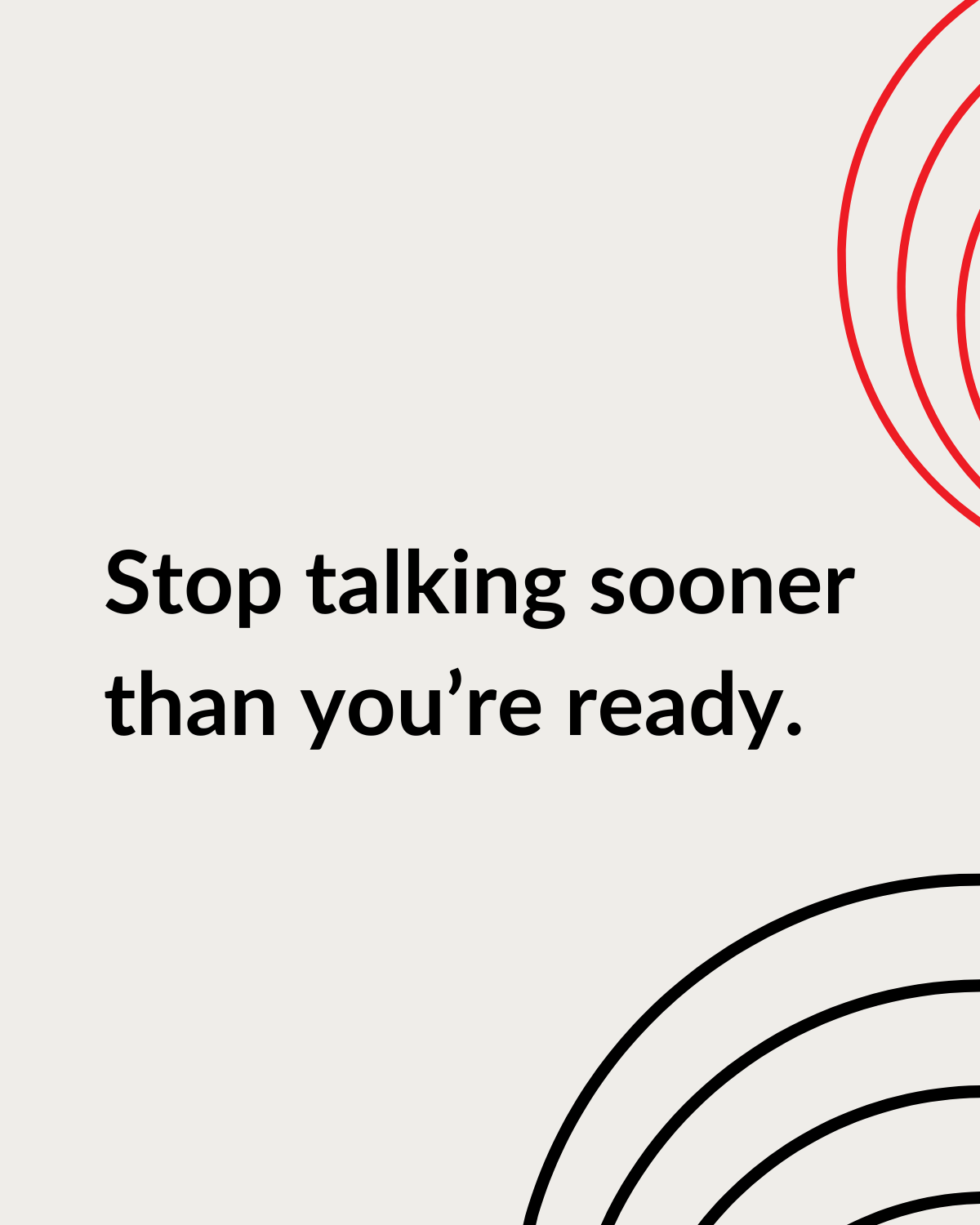
Stop talking sooner than you’re ready.
Clarity doesn’t always come from saying more.
Sometimes it comes from stopping, thinking, and saying less.
What’s your cue that it’s time to stop talking?
by Caroline Leach | Aug 7, 2026 | Change, Communication, Leadership, Learning
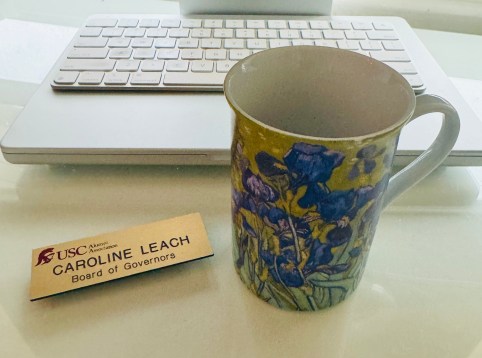
Photography didn’t kill painting.
It created Impressionism.
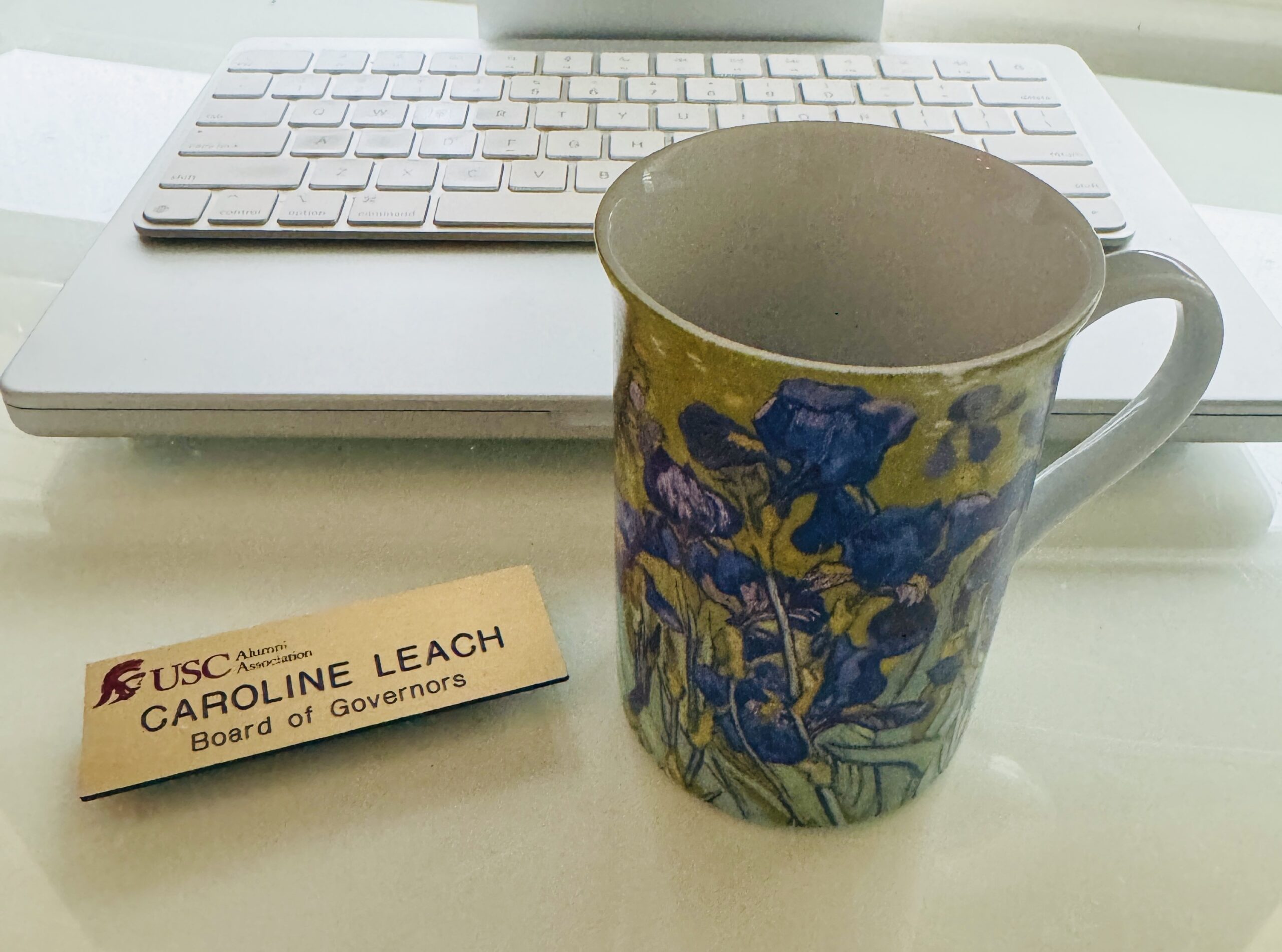
I was reminded of that during a visit to USC this season as an emerita member of the Alumni Association Board of Governors.
As a student in one of my USC Annenberg classes years ago, we studied how technology disrupted art over time.
Before photography emerged in the 1800s, artists tried to accurately mirror real life in their paintings.
Then cameras arrived.
Suddenly, photographs could capture reality better than paintings ever could.
So some artists stopped competing with the technology.
Instead, they created something technology could not replicate.
Emotion. Interpretation. Perspective.
We now know them as the Impressionists. Artists like Claude Monet, Edgar Degas, and Mary Cassatt.
There’s an important lesson for us in the age of AI.
Too many people are trying to out-machine the machine.
The better path is twofold:
1. Work with AI to improve outcomes.
2. Double down on what AI still cannot genuinely replicate: judgment, lived experience, discernment, empathy, perspective, and connection.
Technology rarely eliminates human expression.
It changes the medium.
It spurs evolution.
After all, video didn’t really kill the radio star either.
Radio evolved into podcasts, long-form conversation, and new kinds of storytelling.
Maybe the same will happen with writing, leadership, and communication.
The people who stand out won’t be the ones who sound the most polished.
They’ll be the ones who sound unmistakably human.
What’s one thing you do that AI can’t replicate?
by Caroline Leach | Aug 5, 2026 | Careers, Communication, Executive Communication, Leadership

Most people communicate worse under pressure.
Not because they lack expertise.
Because their attention turns inward.
They start thinking:
↳ How do I sound?
↳ Am I answering correctly?
↳ What if I don’t know enough?
↳ How am I being perceived?
And the pressure compounds quickly.
Working with and coaching senior leaders over the years, I’ve noticed:
The people who communicate best in the moment aren’t the most scripted.
They make a different shift:
from “me” → to “you.”
Instead of focusing on themselves, they focus on:
↳ What problem are we solving?
↳ What would actually help here?
↳ What does this audience need right now?
↳ How can I make this conversation more useful?
This week I’m speaking with MBA students in Singapore about corporate governance and board resumes.
I’ve prepared, of course.
But the most valuable moments won’t come from polished answers.
↳ They’ll come from the discussion.
↳ The questions students are really asking.
↳ The ability to stay present and listen carefully.
In high-pressure conversations, focus on what the audience needs.
How do you shift your focus outward when the pressure is on?


Recent Comments