by Caroline Leach | Aug 22, 2026 | Communication, Leadership

Great communicators don’t just speak well.
They make people feel remembered.
Last week at a university social event, someone I hadn’t seen in four years walked over to say hello.
We don’t know each other especially well.
Yet she remembered my name. She remembered my connection to USC Annenberg. She remembered that my husband Kevin owns and operates a restaurant.
She welcomed my guest into the conversation, shared what she was working on, and was genuinely interested in what everyone else was doing.
It would have been easy for her to stay with the people she already knew.
Instead, she walked across the room.
I’ve thought about that interaction ever since.
As someone who coaches leaders on communication, I spend a lot of time thinking about presentations, conversations, and the words we choose.
Last week reminded me that communication is also about making people feel seen.
↳ Walking across the room.
↳ Remembering something about someone’s life.
↳ Asking a thoughtful question.
↳ Including someone new in the conversation.
↳ Reconnecting, even after years have passed.
The most memorable people are often the ones who make other people feel remembered.
I’m taking that lesson with me.
The next time I’m at an event, I plan to be a little quicker to walk across the room, say hello, and reconnect.
Who’s someone you’ll never forget because they made you feel remembered?
by Caroline Leach | Aug 12, 2026 | Communication, Leadership

Some people think before they talk.
Others think by talking.
As an executive coach, I’ve learned that not everyone processes information the same way. I wish I was more aware of these differences much earlier in my career.
Extraverts often process information out loud.
↳ As they’re speaking, they’re sorting through ideas, testing assumptions, and working toward a conclusion in real time.
↳ The audience gets a front-row seat to the thinking process.
The challenge?
People sometimes mistake thinking out loud for uncertainty, indecision, or lack of preparation.
In reality, they’re often watching someone work through a problem in real time.
Introverts often process internally first.
↳ By the time they speak, their thoughts are frequently more refined and organized.
↳ The tradeoff is that the conversation may have already moved on before they’re ready to contribute.
Neither approach is better.
They’re simply different ways of processing information.
As a leader, it’s worth recognizing both styles.
Be sure to create space for people who need:
↳ To think out loud.
↳ Time to think before they speak.
And if you’re talking to think, make sure to tell people you’re thinking out loud.
That one sentence can prevent a lot of confusion.
by Caroline Leach | Aug 11, 2026 | Communication, Leadership

Early in my career, I watched people leave meetings in tears.
Then it was my turn.
Before I discovered corporate communications and executive coaching, I bought hardware for satellites in the aerospace industry.
Every few months, the director of procurement held something called the triannual review.
Each subcontracts administrator had to present the status of their contracts, explain risks, and answer questions in front of managers and peers.
These meetings had a reputation.
People got grilled about budget overruns, schedule slips, and quality issues.
Some froze.
Some rambled.
Some never recovered once the questioning started.
I had no interest in becoming the next cautionary tale.
Before it was my turn to present, I remember sitting in those meetings, watching the director work his way around the room, and wondering whether today would be the day I got called out.
So I watched the people who handled these meetings well.
What surprised me was they didn’t have perfect contracts to report on.
They had problems just like everyone else.
The difference was they knew their business inside and out.
They prepared deeply.
And once the meeting started, they stopped trying to follow a script.
When the director challenged them, they didn’t panic.
↳ They stayed calm.
↳ Answered the question and shared the facts.
↳ Then returned to the point they wanted to make.
Watching them taught me one of the most valuable communication lessons of my career:
The goal of preparation isn’t memorization.
It’s freedom.
When you know your material well enough, you don’t need to cling to a script.
↳ You can listen.
↳ You can think.
↳ You can respond.
Preparation creates presence.
It gives you the confidence to stay calm when you’re put on the spot.
It gives you the flexibility to communicate clearly when the conversation goes somewhere you didn’t expect.
Looking back, I still don’t believe fear is an effective management strategy.
It may reveal who can perform under pressure.
But it doesn’t necessarily help people solve problems.
by Caroline Leach | Aug 10, 2026 | Communication, Executive Communication, Leadership

One of the easiest ways to sound more confident:
stop explaining after you’ve made the point.
We’ve all done it.
You’re answering a question in a meeting. Somewhere along the way you realize you’ve gone from making a point to circling around it.
The instinct is to keep talking until you find your way back.
This is why it’s so important to read the room while you’re speaking.
To assess body language and adjust accordingly.
Are people looking away? Starting to fidget?
These are your cues to wrap up. Immediately.
Years ago, I joined a board meeting to give an update on a timely topic.
No slides. Just a brief overview and responding to board member questions.
And while I was speaking, I had the thought:
“That’s plenty of information. Time to stop talking.”
In retrospect, I should have stopped a few sentences earlier.
Because if people have questions, they’ll ask.
And board members love to ask questions.
That’s their job.
So make sure there’s time and space for that.
Stop talking sooner than you’re ready.
Clarity doesn’t always come from saying more.
Sometimes it comes from stopping, thinking, and saying less.
What’s your cue that it’s time to stop talking?
by Caroline Leach | Aug 7, 2026 | Change, Communication, Leadership, Learning
Photography didn’t kill painting.
It created Impressionism.
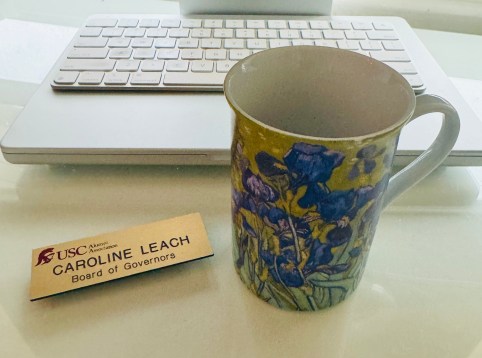
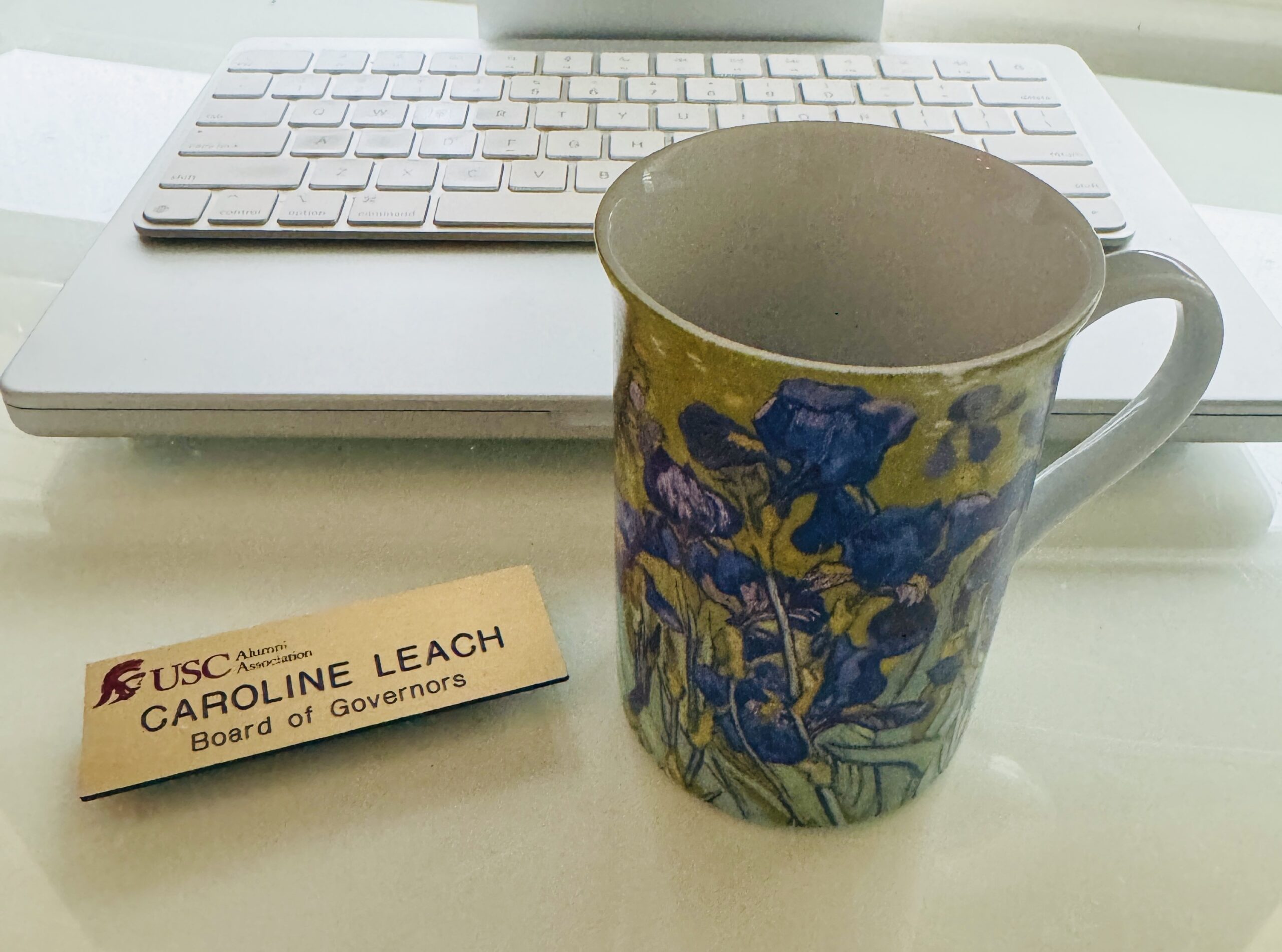
I was reminded of that during a visit to USC this season as an emerita member of the Alumni Association Board of Governors.
As a student in one of my USC Annenberg classes years ago, we studied how technology disrupted art over time.
Before photography emerged in the 1800s, artists tried to accurately mirror real life in their paintings.
Then cameras arrived.
Suddenly, photographs could capture reality better than paintings ever could.
So some artists stopped competing with the technology.
Instead, they created something technology could not replicate.
Emotion. Interpretation. Perspective.
We now know them as the Impressionists. Artists like Claude Monet, Edgar Degas, and Mary Cassatt.
There’s an important lesson for us in the age of AI.
Too many people are trying to out-machine the machine.
The better path is twofold:
1. Work with AI to improve outcomes.
2. Double down on what AI still cannot genuinely replicate: judgment, lived experience, discernment, empathy, perspective, and connection.
Technology rarely eliminates human expression.
It changes the medium.
It spurs evolution.
After all, video didn’t really kill the radio star either.
Radio evolved into podcasts, long-form conversation, and new kinds of storytelling.
Maybe the same will happen with writing, leadership, and communication.
The people who stand out won’t be the ones who sound the most polished.
They’ll be the ones who sound unmistakably human.
What’s one thing you do that AI can’t replicate?




Recent Comments